Hunting Bullet Metrics
Apply Terminal Performance Truth
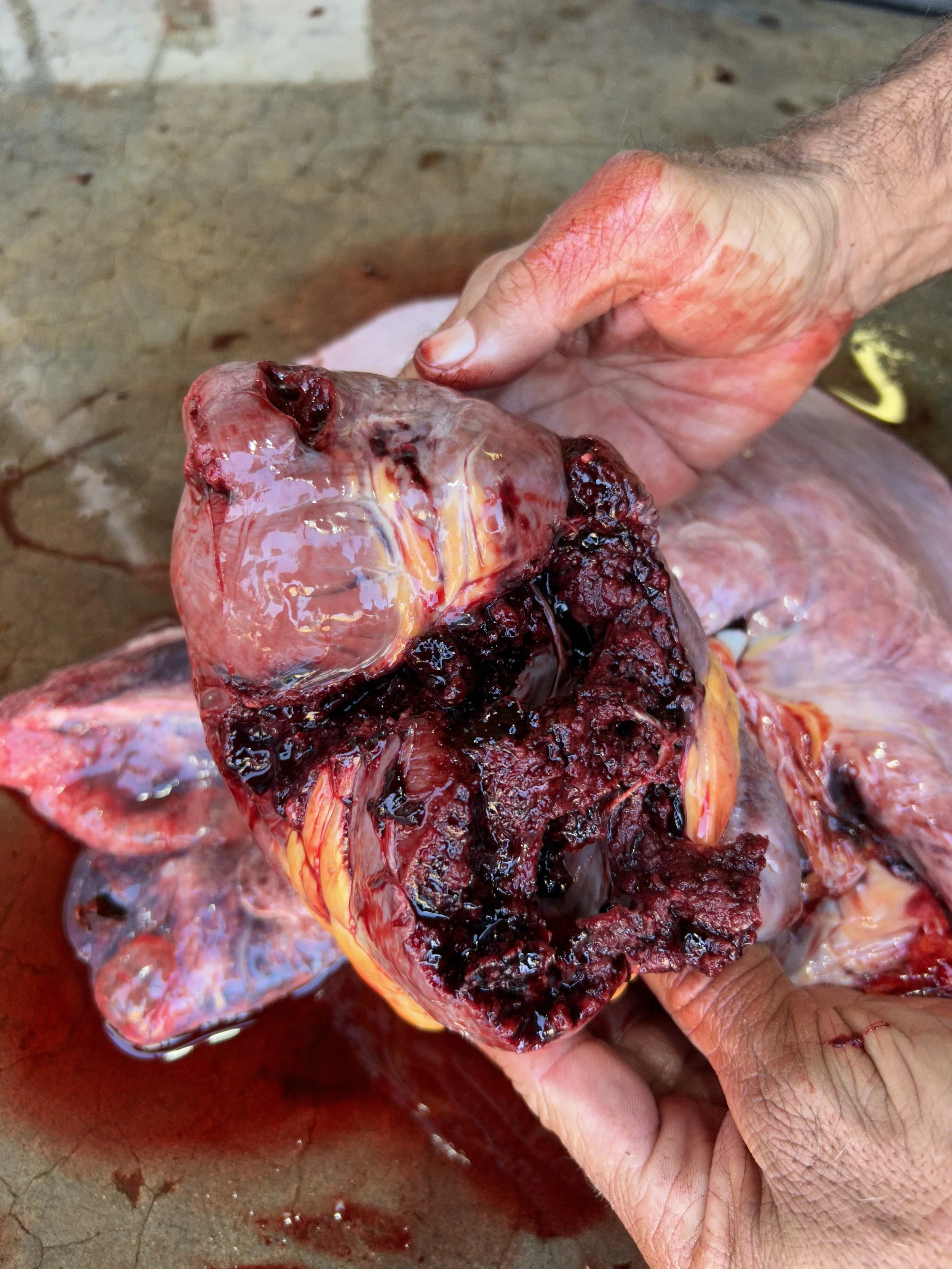
“An expanding hunting bullet’s generic design and impact velocity control the wound volume that determines the degree of its lethality.”
— Scott Fletcher
This website’s original, AI-free content is primarily intended to help hunters strategically select a cartridge-bullet combination based on a specific animal, the defined hunt circumstances, and the desired wounding, penetration, and meat preservation goals. The selection process is metric-value and numerical-analysis based. Worked example problems are resented that explain and use metrics that are relevant, show how the metric values are obtained, show how the metric values can be analyzed, nd provide guidance on how to interpret and apply the analytical results.
The bullet-selection process relies on an empirical relationship between an expanding hunting bullet’s weight and the hunted animal’s weight. The relationship is based on data and recommendations published by African Professional Hunters Kevin Robertson and Finn Aagaard, and Craig Boddington, an accomplished North American practioner. The relationship was vetted based on field results obtained during a 2023 zebra management hunt.
The bullet-selection process also relies on empirical relationships between an expanding hunting bullet’s metric values obtained from testing in 20% synthetic gel and its field wound volume in vital organs, penetration length through an animal’s thoracic cavity (rib cage), and the qualitative degree of meat damage produced by its penetration. These relationships are based on both field and skinning-shed autopsy data obtained during the 2023 zebra management hunt. The complete 84-page management-hunt report can be accessed by clicking on the “2023 Hunt Report” tab on this website’s header.
A personal analytical model, called the Guppy, is the basis for the metrics that empirically predict field wound volume, penetration length, and the degree of meat damage. A two-dimensional schematic of the model can be accessed by clicking on the “Guppy” tab on this website’s header, and the mathematical definitions of the metrics can be accessed by clicking on the “Guppy Tech” tab.
The Guppy model simulates the wound in an animal made by an expanding hunting bullet. The crack configuration made in 20% synthetic gel by the bullet models (simulates) the radial extent of the wound’s bloodshot tissue. The calculated test volume of the metric V(ST) empirically predicts a field wound volume; the measured test-length of the metric L(T) empirically predicts an effective field-penetration length; and the value of the metric I(V), calculated from the metric test values V(S) and V(PS), empirically predicts the qualitative degree of meat damage (bloodshot tissue). Terminal performance articles are presented that describe the data-based relationships between the test-metric values and field data, found by clicking on the “Terminal Performance Articles” tab.
The metrics of V(ST), L(T), and I(V) replace the traditionally accepted prediction metrics of bullet impact energy, mushroom diameter, weight loss, and sectional density. Terminal performance articles using data from the 2023 hunt report demonstrate these traditional metrics are either misleading or completely false in predicting an expanding hunting bullet’s field performance. These articles can also be found by clicking on the “Terminal Performance Articles” tab.
Strategic testing methods are required to achieve hunt-specific Guppy-metric values. Gel-testing articles, found by clicking on the “Bullet Testing Articles” tab, present testing strategies, Guppy-metric test values of various cartridge-bullet combinations, general testing protocols, photos of representative test equipment and set-up, and general guidance on how to interpret and apply the test results.
Considerable website content is dedicated to both explaining and applying the terminal performance concepts implied by Guppy model. The eBook Africa Hunter Quest was crafted as a worked story-problem example of how to apply these concepts to a fact-based hunt. The eBook, presented in its entirety, can be accessed by clicking on the “eBook” tab. Furthermore, worked example problems, based on actual data from the management hunt, are also embedded in various terminal performance articles demonstrating how to evaluate and apply these concepts.
Effective selection and use of accessory equipment can significantly contribute to a hunt’s success. Articles describing products, equipment, and related selection issues are found by clicking on the “Hunting-Related Articles” tab. Videos demonstrating effective equipment-use techniques as well as explaining key terminal performance concepts can be found by clicking on the “Videos” tab. Content accessed by these tabs is typically based on personal lessons learned acquiring advanced degrees from the “School of Hard Knocks”.
This website continues to evolve. New content is added based on hunter and manufacturer feedback. Please periodically check this website’s Header for new tabs and the articles’ and video’s “Table of Contents” for availability.
I hope all who access this website find beneficial content. To the hunters, I wish everyone a gratifying hunt outcome where you can conclude “the juice was worth the squeeze”.
Scott Fletcher